Nueva España and Mexico

Colonial Mexico History

A brief 500 years: how Nueva España became modern Mexico, and why it matters for your family tree.

Throughout the first three centuries of the colonization, people from Spain and many other parts of the world left their homelands for more and better opportunities. Some came seeking wealth from precious metals; others, including Jews and Moors forced out of Spain and other parts of Europe during the Spanish Inquisition, had little choice but to cross the Atlantic.

What follows is a brief timeline of the five centuries that shaped Nueva España, and later Mexico — the backdrop against which most Tex Mex family records were written.
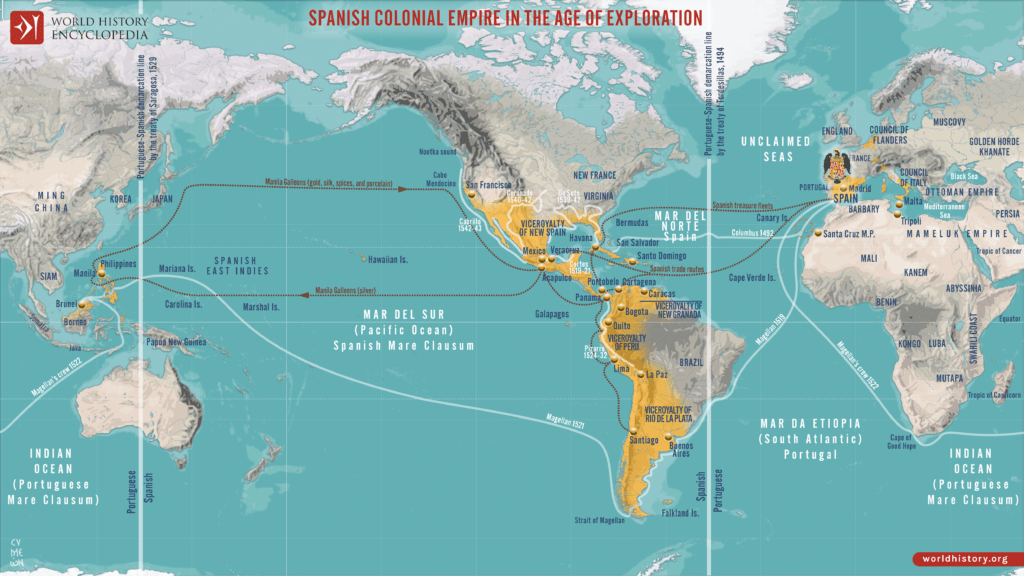
Map of the Spanish Colonial Empire in the Age of Exploration

The Spanish Colonial Empire in the Age of Exploration. Public domain, via World History Encyclopedia.

1519–1521

Hernán Cortés conquers the Aztecs at Tenochtitlán with the help of indigenous allies and superior weaponry.

1524

Presidios (military outposts) begin to be established in the northern reaches of Nueva España.

1525

The first Catholic diocese in the New World is established at Tlaxcala.

1526–1572

Spanish forces under Francisco Pizarro conquer the Inca civilization in South America.

1540

Silver is discovered in Zacatecas, drawing settlers north and fueling the colonial economy.

1545–1548

A major disease outbreak devastates indigenous populations across Nueva España.

1562

Nueva Vizcaya, covering much of today’s Chihuahua and Durango, is established as a Spanish province.

1631

Silver is discovered at Hidalgo del Parral, establishing a hub on the northern frontier.

1680

The Pueblo Revolt at Santa Fe drives Spanish settlers south, reshaping migration on the frontier.

1810–1821

The Mexican War of Independence ends three centuries of Spanish colonial rule.

1846–1848

The Mexican-American War redraws the border, reshaping where families and their records ended up.

1910–1920

The Mexican Revolution overthrows the Diaz dictatorship and reshapes the nation once more.

Before Chihuahua

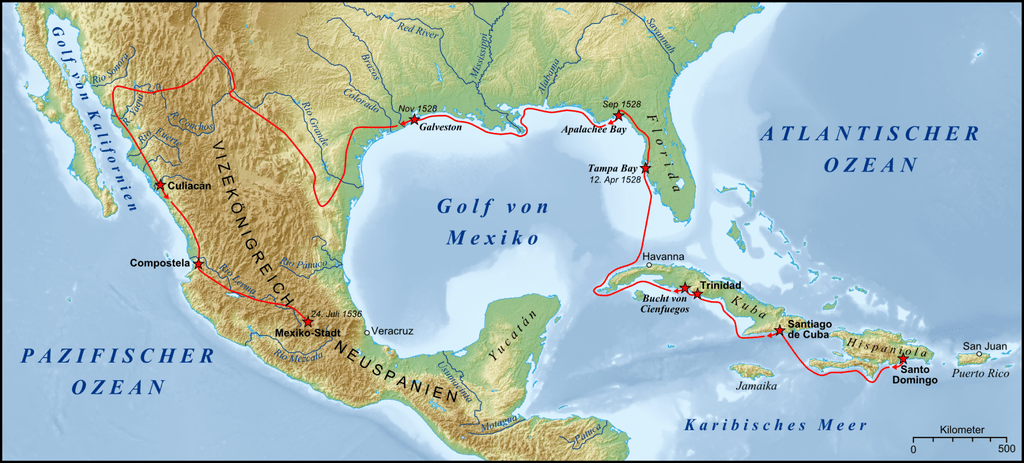
Cabeza de Vaca’s crossing, 1528–1536

Decades before the presidios and parish registers this site is built on, Álvar Núñez Cabeza de Vaca survived a shipwreck on the Gulf Coast and walked west across what is now northern Mexico and the Southwest — one of the first Europeans to see the region your ancestors would later settle.

Map of the Cabeza de Vaca expedition route through the Gulf Coast and northern Mexico

Route of the Cabeza de Vaca expedition, 1528–1536.

See how this plays out in the records