Records research
Catholic church records are the best source for discovering your ancestry from Mexico, but there are many other sources that can help you discover the stories behind your distant relatives.
The largest source
The earliest churches in Nueva España date back to around 1525, when the first church diocese was established. Church records were kept in book volumes at individual parish locations, and as communities grew, parishes accumulated more volumes over time. Events that were typically recorded were baptisms, confirmations, marriages, marriage dispensations, deaths (including some wills and testaments) and burials. All scanned volumes are accessible through the FamilySearch website, which covers parish locations in Chihuahua, Coahuila, Nuevo León and Tamaulipas dating back to the 1600s.
For expanded terminology and language resources, FamilySearch offers a free wiki that is worth creating a free account to access.
The scanned parish registers are held on the FamilySearch website. Select a state below to search its collection of church records.
Find the right parish
Coverage runs across Chihuahua, Coahuila, Nuevo León and Tamaulipas, with parish volumes dating back to the 1600s. Our Church Locations map plots every parish we track so you can find the one that covers your family’s town or region.
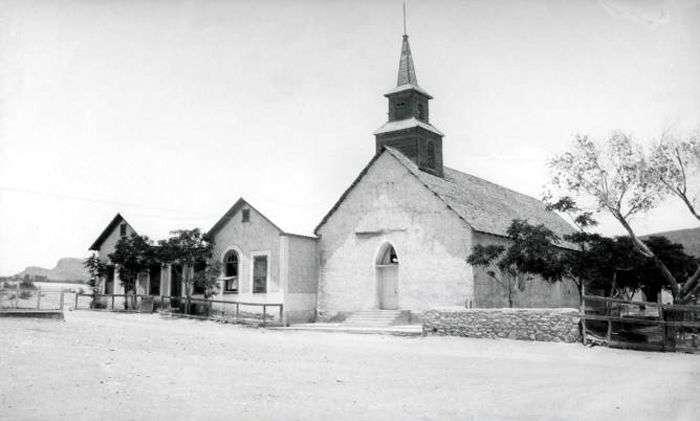
The Catholic church in Shafter, Texas.
Military records
After the fall of the Aztecs, the Spanish government needed a way to protect its newly acquired claims in the New World, and the people beginning to settle there. Versions of the presidio were already in use elsewhere in the Spanish empire, and Nueva España would need it too. The vast territory, combined with the unknown nature of the indigenous peoples, eventually led to the installation of over 200 presidios during the colonial period.
A presidio was essentially a military outpost of armed citizens responsible for protecting a location and the people within it. Over three centuries, everything from how presidios were built to how they were staffed changed many times. Many were initially funded privately by wealthy individuals protecting their own claims; later, the Spanish government began subsidizing them. Presidios were eventually established virtually everywhere the Spanish Crown claimed territory, from Baja California to what is now northern California. In the end, presidios proved to be something of a band-aid: there was too much territory to cover with limited resources, and these territories eventually gave way first to local citizens seeking separation from the Crown, and later to the United States.
While a presidio typically did not house large numbers of men, reporting requirements included muster rolls and military censuses. A muster was a military inspection to evaluate the readiness of troops, and in some cases included not just soldiers but all men of fighting age. Musters usually listed the names of those who presented themselves, often with what they brought to the fight — horses, rifles, pistols, shields, lances and other equipment, usually self-supplied. Some musters even include physical descriptions for identification.
One of the more interesting aspects of presidios, as they relate to migration and to your research, is that many were relocated over time — and with them, some of the men and their families. If records for an individual seem to “disappear” from an area, a presidio relocation may be the explanation worth exploring. Some of the musters and military census documents encountered in our research include:
Contact us if you would like more information on how to find these.
Source: Williams, J. S. (2004). The Evolution of the Presidio in Northern New Spain. Historical Archaeology, 38(3), 6–23.
Counting the population
These census reports, or “padrones,” were taken all over Mexico during the colonial period, basically to identify and track the various individuals in a given area. The documents served multiple administrative purposes: assessing available labor, evaluating military preparedness, and monitoring family members. Indirectly, they also helped classify individuals by “calidad” for social ranking.
Although musters differed from a census in that they only recorded military personnel, they captured much of the same kind of information. Enlistment records (filiaciones) are scarce and require knowing exactly where to look.
Beyond the church records
If you have the time to look for them, there are near-limitless resources outside of the Catholic church records. A few we return to often: